
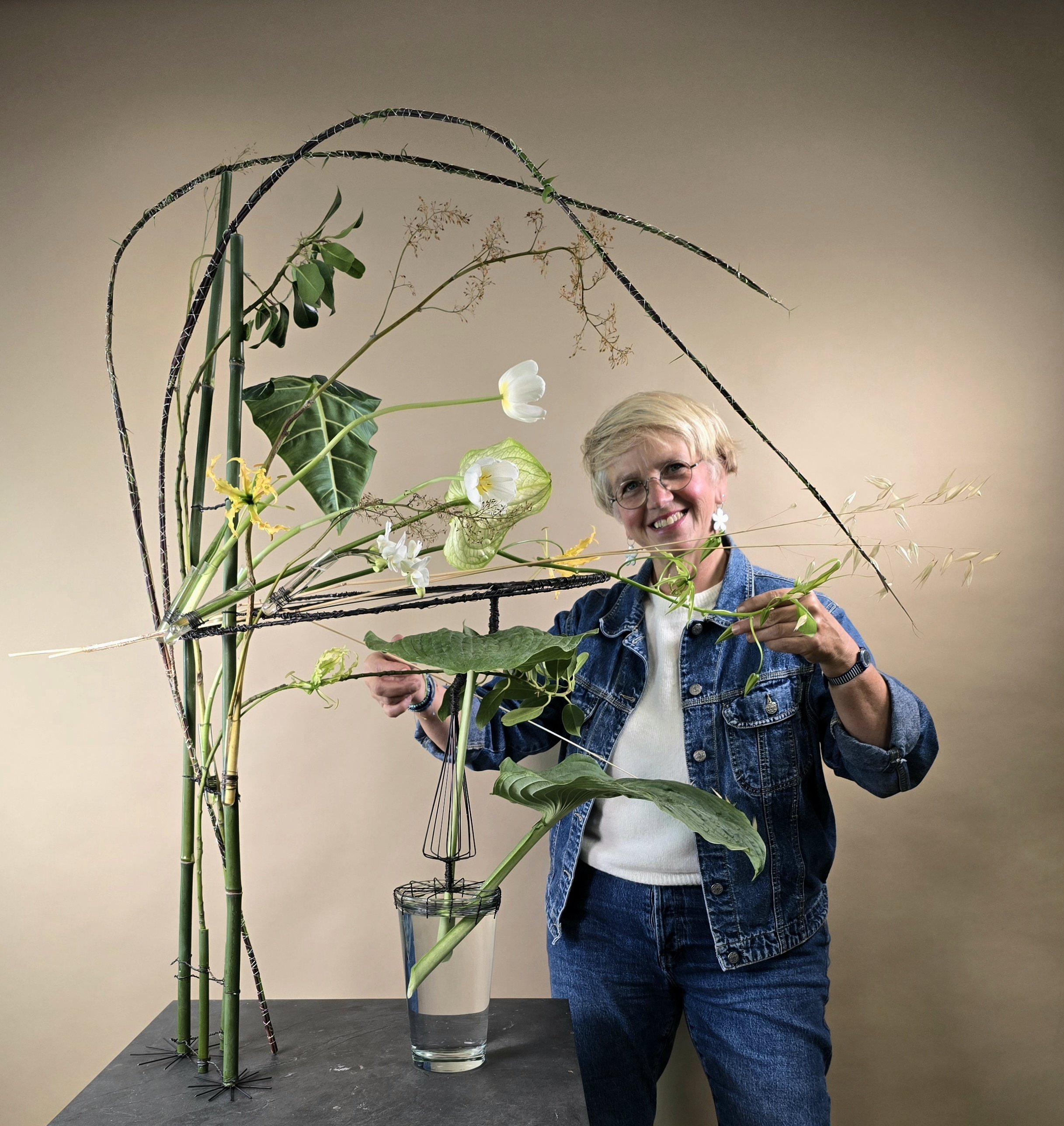
I first met Marion at this year’s Melbourne International Flower and Garden Show and I was immediately drawn to her friendly, stress-free energy. Over several days, I would pass her as we both worked on setting up our individual competition designs and later we had the chance to chat in the backstage prep room.
I was in awe of her workmanship, her incredible knowledge and most of all, her passion for floristry and for enjoying life in general. Marion has a wonderful way of taking on new challenges with a smile, an open mind and a simple, “Well, why not?”
Between her many commitments and floral projects across Europe, I was lucky enough to pin her down to answer a few questions and give us the chance to get to know her, her remarkable journey and her life as a travelling freelance florist a little better.
1. Can you tell us a little about yourself, your background and the work you do as a florist?
My name is Marion Benz. I was born in 1967 and grew up in a flower shop in Germany. My father was a master gardener and my mother was a master florist, so flowers and plants were always part of our family life. My siblings also became gardeners and florists, but I was the one with more wings to fly away from home.
I learned floristry from my mother in her business and completed my apprenticeship in 1987. Even during my apprenticeship, I entered competitions and worked at flower exhibitions. All my friends were florists. We were such a cool gang, and it was normal for me to have a full agenda.
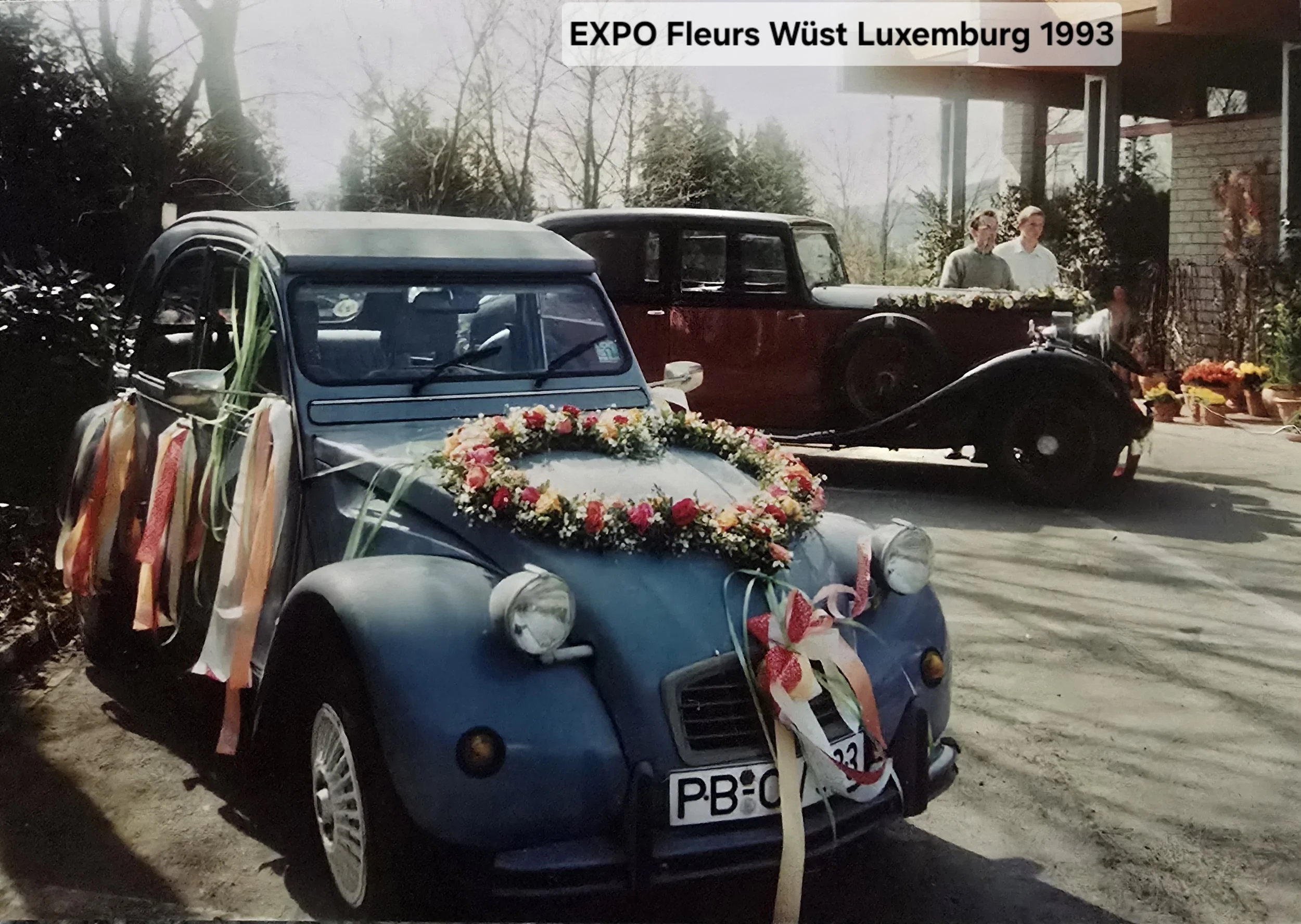
In 1988, I started travelling for flower exhibitions, first close to my hometown and then further away. Soon after, I saw a job advertised at a large flower shop in Luxembourg. New countries and new challenges have always interested me, so I applied.
Fleurs Wüst was a completely new dimension for me. It was a family-owned business with a team of more than 10 florists who really understood the industry. We were able to focus on creative floristry and design, and I later represented Luxembourg at the Florist World Cup in Paris.
During that time, I reconnected with my teenage boyfriend from Switzerland. He was living and working as a chef in the Cook Islands and asked me to visit him.
“Marion, open for the world,” bought a ticket and off she went.
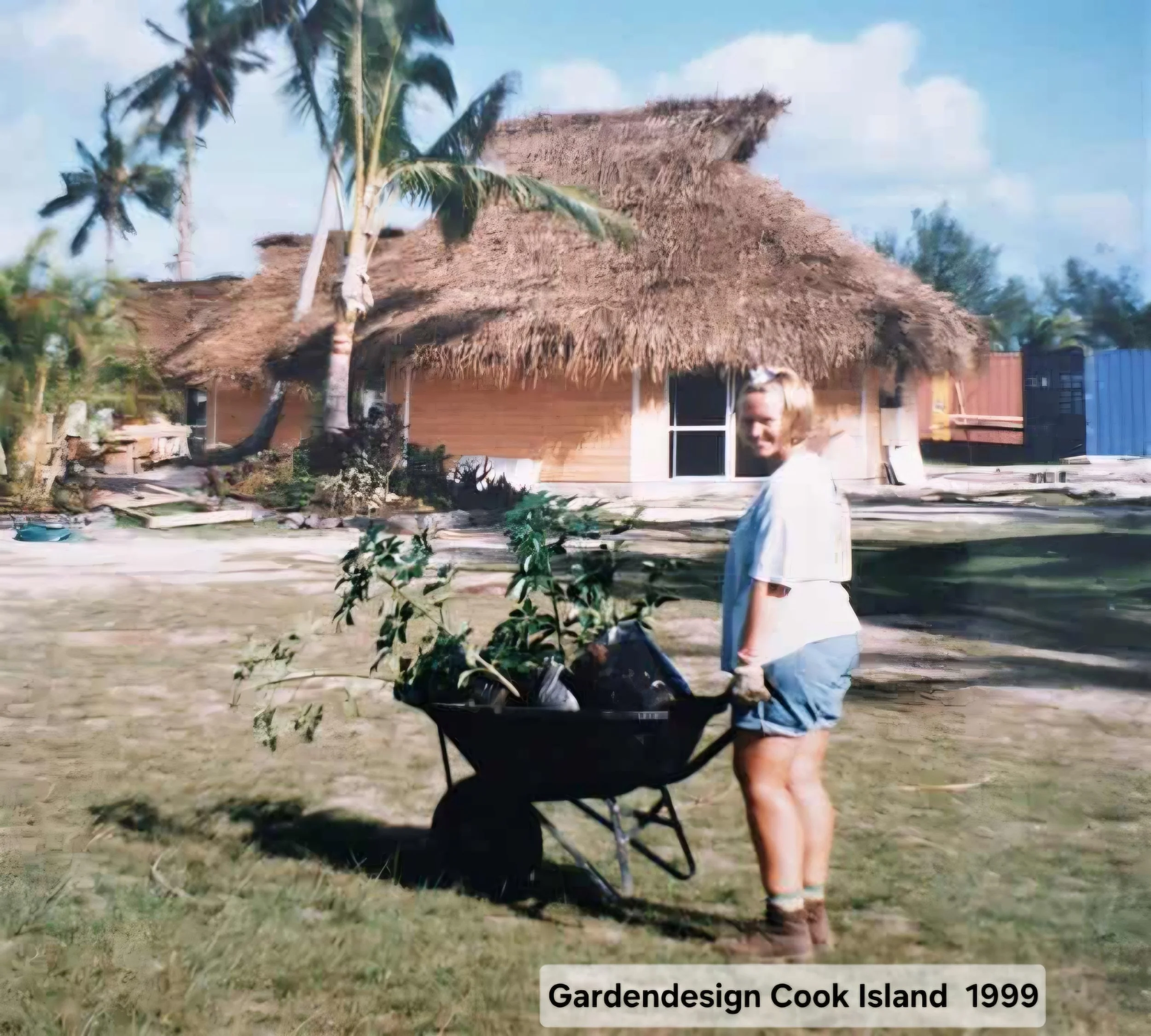
Love hit us like a rock, so I returned to Luxembourg, told Madame Wüst I was leaving, and moved to the Cook Islands. It was almost on the opposite side of the world from my hometown, which made it even more exciting for my wings.
There was not much of a challenge for a florist there, but I started working at the island’s only flower shop. I was the first European-trained florist there, so I had plenty to learn about tropical materials and also plenty to teach.
After some years of travelling and moving between the Cook Islands, Germany and Switzerland, we settled in Switzerland. I worked in several flower businesses around Zürich, including Blumenland Meier near Zürich Airport. I especially enjoyed the variety there, including weddings, exhibitions, parties and large decorations. Every day brought something new.
Self-employment was still on my list, so eventually I opened my own business. It was not a traditional flower shop. I focused on interior decoration and plants, with cut flowers for larger orders. I ran the business successfully for 15 years.
Then Coronavirus came and showed every hardworking person how difficult life can be when you are suddenly not allowed to work. It gave us time to rethink our lives. In 2023, we sold everything in Switzerland and bought a small house in the north of the Netherlands, hoping for a little more time for ourselves.
Soon after moving, I saw a course nearby with Bart Hassam. I wondered whether it was time to reconnect with real floristry again.
The course made me feel alive. Bart gave us so much information, and I had admired his style since he became World Champion in Floristry in 2019. Suddenly, I was burning again for my florist vibes.
I started a small atelier in the countryside, but it was too narrow-minded for me. Nice, but not my perfect me. I needed more, so I returned to competition work and began working as a freelance florist under the name Marion Like Flowers.
My former bosses were among the first to offer me work for special events, and step by step my agenda began filling again. One project took me to a wedding in France, where a young florist needed help. I packed my car and drove 1,388 kilometres each way to work alongside her.
In March 2025, I travelled alone on a world tour, giving workshops in Hawaii and the Cook Islands and visiting friends in New Zealand and Australia. Travelling alone and reconnecting with the world was the best thing I could do at that time.
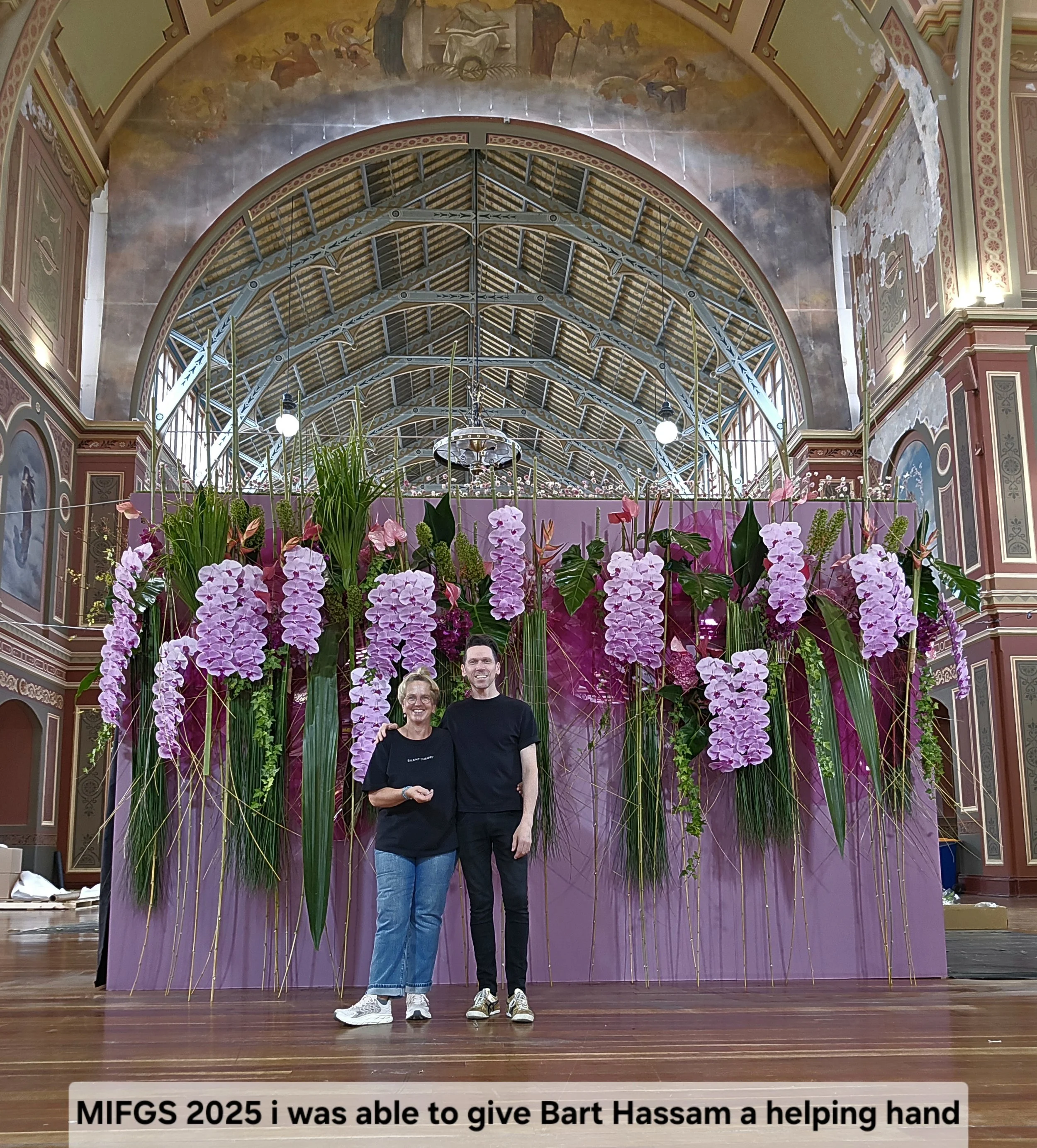
During my travels in Australia, I met the florists from Unearthed Interiors in Port Fairy and offered them some tips and help. I also connected with Bart again and helped with his installation at the Melbourne International Flower and Garden Show.
That was my first real connection with Australian floristry, and I was completely fascinated by the floral designs at MIFGS. It is also the reason I returned to Australia in 2026.
2. Travel is a huge part of your life. How have you managed to incorporate this into your career as a florist?
I have always loved to travel, privately and for work. Throughout my whole working life, whether I was an employee or during the 15 years I was self-employed, travel was often connected to my floristry career.
I travelled to different countries to shop and find inspiration, including trips to Maison & Objet in Paris and to the Netherlands to discover new and interesting things for my shop.
These days, I don’t have too much pressure on my shoulders. I don’t have children, and I am free like a bird. I can work when there is work, give workshops when they fit into my agenda and offer one-to-one sessions with florists who would like to learn from me.
The rest of the time, I enjoy having time off. I worked so many extra hours throughout my life. Now it is time to enjoy life a little more.
3. What does freelance floristry look like for you? How do you find projects, clients and opportunities while moving between different places?
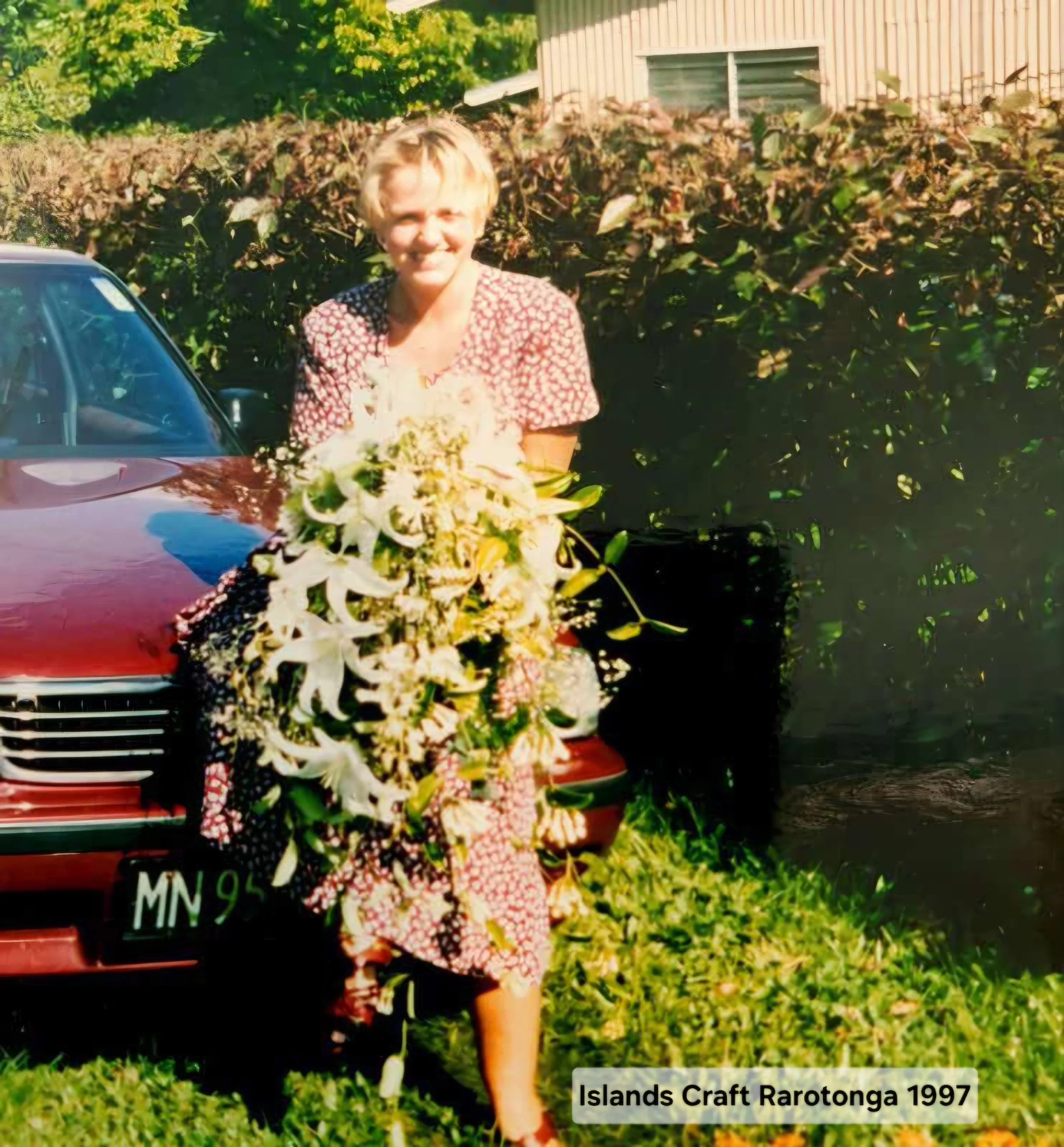
I was very lucky that some of my former bosses offered me freelance work. They already knew my working rhythm, my experience and what I could bring to a project.
From there, people started talking and letting others know that I was available whenever I had an empty space in my agenda. Instagram is also very important. Tagging the companies, designers and flower growers I work with helps people to discover my work and make new connections.
Kindness is important, as it always is in life. Everything good comes back to you. Sometimes you help somebody for a smaller payment/fee and later that person connects you with somebody else who needs an extra pair of hands.
I work very cleanly and technically and I make sure the flowers last as long as possible. That is very important to me. When I am working for another designer, the design belongs to them and I create exactly what they have asked me to do.
I am simply a professional florist with trusting hands and a smiling face. I can also work for hours without talking!
4. Are there particular countries, cities or events that have had a strong influence on your style or the way you work with flowers?
As I mentioned, when I work for another company or designer, the style is usually given by them. My role is to understand their vision and create the work in the way they would like it done.
I also work in teams where many different styles are possible, especially when we are creating pieces to sell in larger shops. In those situations, I can work with the colours I love and bring more of my own style into the designs.
When you have worked in floristry for as long as I have, you realise that everything begins with the basics. Every style seems to come back again, perhaps after seven years, but with different greenery, new colours, different flower shapes or a slightly different angle.
As a professional florist, it becomes easier to understand these changing styles, work with them and still bring a little of your own signature into the design.
5. What are some of the challenges of travelling and working, and what do you enjoy most about it?
I enjoy everything about it. Being open to new places, different work schedules and new people is all part of the experience.
Sometimes I arrive and think, “Okay, that’s new…well, why not?” When you are working to a fixed timetable, you are not always in a position to turn everything upside down. I am there to help create a good flow, be part of a good team and find solutions when I am asked.
You always learn something. Once you warm up to the new situation, you are completely in and often don’t want to leave when the project is finished.
Every creative team is different. Some groups are so busy creating that there is almost no time to eat, so I have learned to always carry some nuts or candy with me.
Other teams like to eat and talk a lot and then you think, “Okay, it is nice that I am being paid by the day!”
6. Many of us who attended MIFGS this year heard the wonderful story of how you came to enter the hanging floral competition. Could you share that story with our readers?
After helping Bart Hassam with his installation at MIFGS in 2025, I thought travelling to Australia again in March 2026 would be a good idea. I could visit the show before flying back to Amsterdam.
While staying with my friends in Port Fairy, I saw on Instagram that one of the hanging installations/gardens was still empty and available for a florist to enter the competition.
I thought, “Well, I have time.” But I waited one day because I didn’t want to take the opportunity away from a spontaneous Australian florist. Then I sent a message saying, “If you don’t find somebody, I can do it.”
Two minutes later, I received the reply: “You are in.”
That is what can happen when you are spontaneous! I thought, “Oops…well, why not?”
I then discovered the theme was Kaleidoscope and the colour was blue, which was another challenge. I contacted Elisabeth Ricci, the Content Curator for MIFGS, and she promised to help manage everything for me. And she did.
I had to focus quickly. My idea was on paper soon after receiving all the competition details, although reading everything on a smartphone while travelling was not easy. I didn’t even have a florist’s knife or garden scissors with me, and there were only three weeks until the installation had to be completed.
Luckily, I had a rental car and somewhere to stay in Melbourne. I went to Spotlight and bought silver foil, blue felt, wool, ribbon, a blue bucket, a proper knife and scissors.
While I was still in Port Fairy, I began preparing. When you create something this large on your own, you need to be very well organised.
On the Sunday, I arrived at the Royal Exhibition Building. In typical Swiss style, I was too early and the first person in the hall. The building was so impressive and full of history, especially when I walked into the space and saw my name.
Slowly, the other designers arrived, along with the extra-large eucalyptus branches I had ordered. When I left that evening, I had a good feeling because the base was complete.
On Monday, the flowers arrived a little later than expected, so I had time to walk through the garden displays. It was very impressive to see so many hardworking, smiling people building such a unique garden show, with a real barista making coffee for everyone.
At around 11am, I returned to my installation and started working with the blue flowers. I separated everything into three groups and added blue tape to the ends of the hydrangea stems because I love the small details. I also used steel grass as a background colour.
My main flowers were orchids from Flower Meister International. They dyed them in the different shades of blue I had chosen and generously sponsored them for the installation.
There was a problem with customs, and the orchids arrived just before we had to leave the hall that afternoon. I quickly tested whether my technique for hanging them would work. It did, so I went back to my friend’s home and had a glass of champagne to calm down.
The next day, we had to finish by 12 o’clock. Hanging all 120 stems of orchids was such a joy, and I was the first person to finish. At around 11.30am, I treated myself to a very good cappuccino.
While we worked, the entire structure was lowered to around two metres. Each day, the technical team raised it so we could stand underneath and see whether anything was missing from the design.
The judges first viewed the work while it was lowered, and then judged it again at its final height of five metres, ready for the audience.
From all my years of entering competitions, I have learned to read the brief two or three times. I used the full six-by-two-metre grid and worked two metres deep. Altogether, I filled around 24 cubic metres with flowers.
The flowers were still able to move, and every flower had its own space.
On opening day, I was able to meet the sponsors from Taiwan, Flower Meister International. They were such lovely, kind people, and I was very grateful for their support. It is not easy to find blue flowers, and the orchids were unique and lasted until Sunday evening.
The lovely Lynne Dallas presented the trophies. There were many different competitions, and eventually the awards for the largest displays were announced.
I received the gold medal.
What a surprise! But I had done what I love, with professionalism and passion.
I was very high on emotion because, on the same day, I also received the news that my divorce papers had gone through the court. A new chapter in my life had begun.
My former husband and I say that we are now happily free and ready to start again. We shared 33 good years, and now it is time for the next chapter.
Celebrating with a gin alongside Lynne, Lauren and Bart was the cheers I really deserved.
7. How did you enjoy your time at MIFGS and your experience of the Australian floral industry?
It was totally good!
I came prepared, and everybody was very kind. I was able to borrow anything I needed. To everyone there, I was the florist from the other side of the world, a bit like a bird of paradise with my funny English.
The only little problem happened on the second day when I forgot my lunchbox. I told Ritchie Go and then, like a miracle, food appeared on my table, with even a selection to choose from. Thank you, Ritchie!
Ritchie had a back problem and couldn’t go on stage on the Sunday, so I stepped in and did it for him. Florists look after each other.
I was also very happy to help Bart prepare the steel grass for his stage work, so we had our moments together. I enjoyed spending time in the preparation room, where the level of floristry was very high, and Bart also helped me prepare for my own stage presentation.
My English probably needs to get a little better for stage work, I reckon, but I had a party and enjoyed every moment. I was even able to choose four songs and Chloe from the technical team created the perfect stage party for me.
The audience loved it.
8. What has been one of the most memorable floral projects you have worked on during your travels?
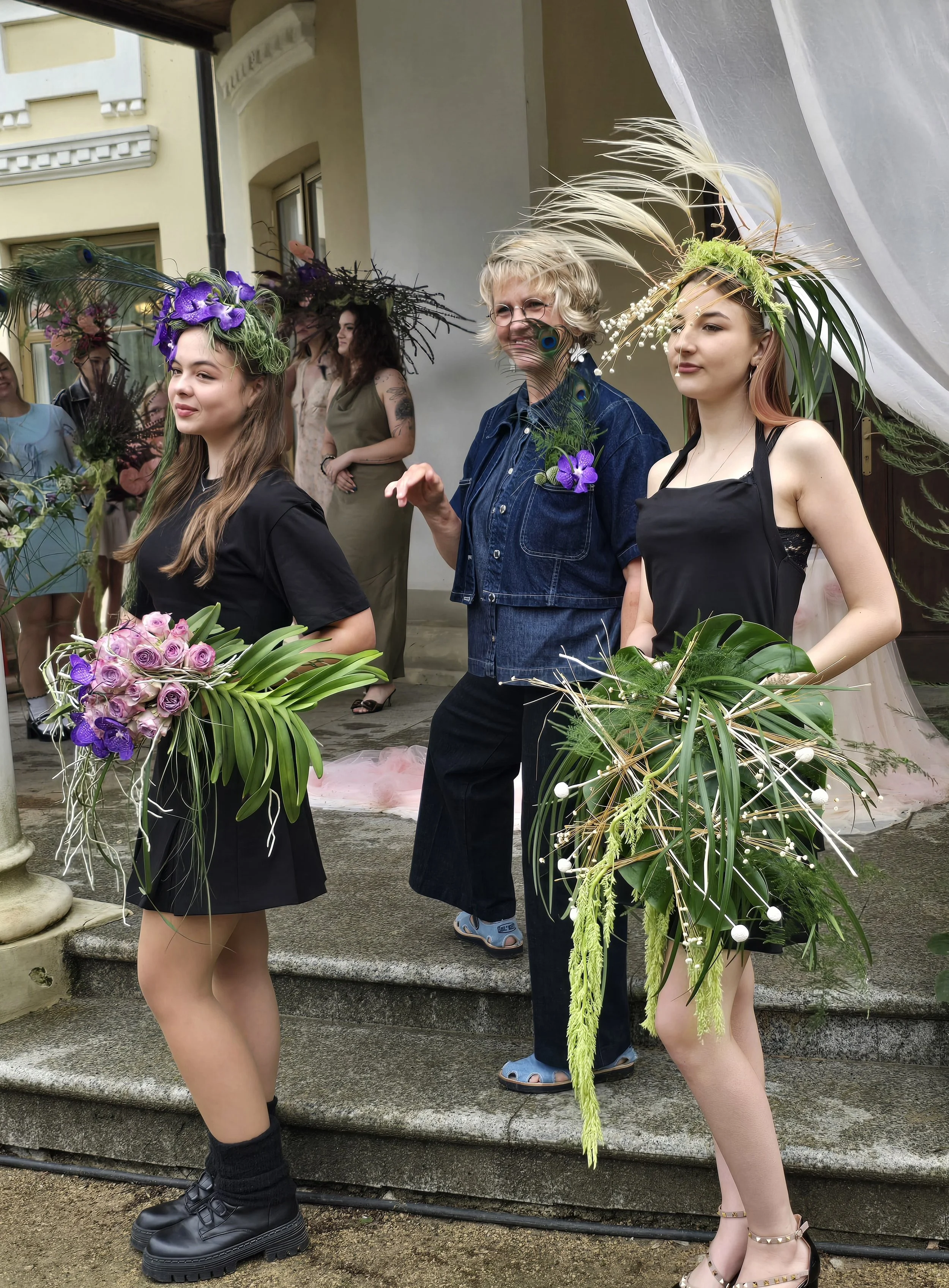
I enjoy every project I work on, whether it is small or large, one of a kind or 120 pieces all the same.
For many of them, I don’t have photographs. You work hard, clean everything up and then the first guests begin to arrive. At that point, you don’t want to disturb the whole atmosphere by walking around taking photos.
I am now looking forward to working in Lithuania in July 2026, where I will create a floating rose object and installation for a rose show at a manor.
They told me I can create whatever I like, and I have never made something floating before. So, stay tuned on Instagram at @marion_like_com.
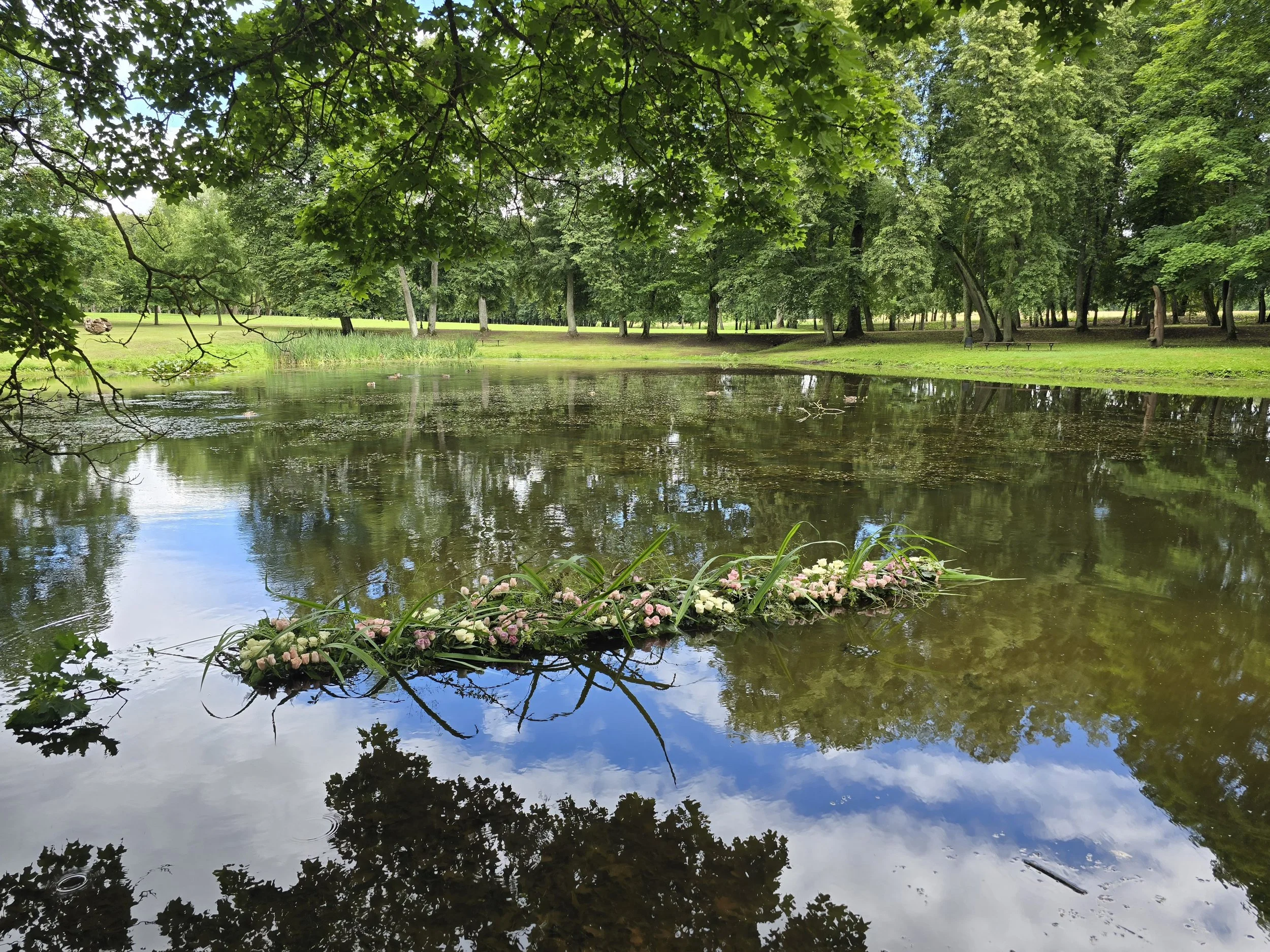
Marion’s floating Rose Design
9. Is there a destination or floral event you would still love to work at one day?
I have never been to Africa. I would love to decorate a farm or lodge there, or visit a flower farm and create something on the property.
I have also never been to the centre of Australia. Maybe somebody has a job for me there?
Let’s connect and talk about it.
10. What have you been working on since MIFGS?
Since MIFGS, I have mostly been working at a German flower show. I also returned to Luxembourg to help my former employer, Fleurs Wüst, with their Mother’s Day flowers.
11. What plans or projects do you have for the remainder of the year?
In July, I will be creating an installation for a rose festival in Lithuania. I also have several more shows at the German flower show in Neuss and will be giving workshops in Switzerland in September.
Later in September, I am really looking forward to decorating a 70-square-metre room at Féerie Florale, held at Alden Biesen Castle in Belgium.
I will be creating the room with a florist friend I really like and enjoy spending time with, so I cannot wait to work on it together.
Florists from all over the world will be there and each person will have their own room to transform into a flower miracle.
The new World Florist Championship winner, Anja Ersing, will also be there. She is a great florist and I am looking forward to catching up with her.
12. What advice would you give to florists who would like to explore freelance work or travel through their floristry career?
First, you really need to build strong work experience. Your apprenticeship gives you the foundation, but you begin learning more deeply once it is finished.
Work as an employee in places that offer a wide range of projects and orders. Take courses whenever you can. When you don’t have the money, ask whether you can help prepare for a course in exchange for the opportunity to learn.
I also believe competitions are important because they help you discover and develop your own signature style.
My mother always told me, “Do your own thing. Be proud to be the last or the first, but please don’t be in the middle.”
The first and the last often stay in people’s minds because they are special and different.
Save money as well. When there are no orders coming in, having savings means you don’t have to feel so much financial stress.
Jump over your own shadow and be willing to try everything. Trust me, it will take you further.
A good Instagram account is important, but don’t make it too unrealistic. Show the moments when something has failed and explain what you changed. Show that you can live with mistakes, learn from them and keep moving.
Most importantly, be authentic.
13. Do you think we may see you back in Australia for another Melbourne International Flower and Garden Show?
Of course. I already have the 2027 dates in my calendar.
I may even go to the Port Fairy Folk Festival first and stay with my friends again. I would also like to visit Bart Hassam’s new school, My Flower School Brisbane and book a course there.
Maybe I will come back even earlier and work in Australia over Christmas. I already have an offer from down under, so let’s hope the work permit works out.
I am looking forward to catching up with all my Australian florist friends very soon.
Creative regards,
Marion
The Netherlands, 7 July 2026